
Petit Forestier Group doubles its connected vehicle fleet
But why accelerate this transformation now, after several years of development, and what opportunities does it open up for our business?
When connectivity improves service quality
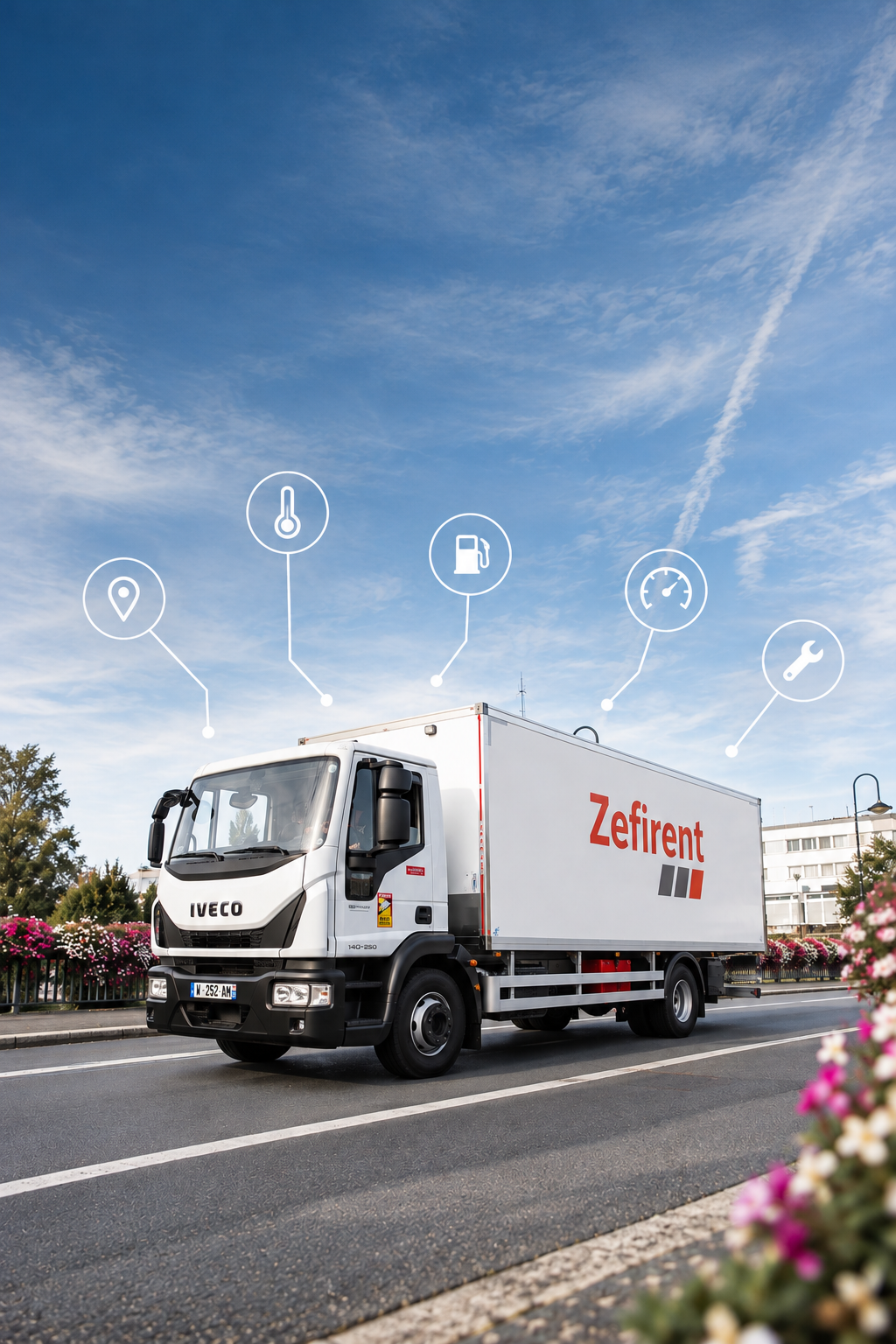
In the refrigerated vehicle rental industry, vehicle availability is essential. For customers of our rental brands, vehicle downtime can have a direct impact on their operations and the continuity of the cold chain.
This is where connectivity is playing an increasingly important role. By enabling vehicles to remotely transmit information about their condition and usage, it provides greater visibility into how they are performing while being operated by customers.
Where certain issues could previously only be identified during a workshop visit or following an incident, vehicle data can now be accessed remotely, in real time.
The objective is simple: detect problems earlier, facilitate maintenance and minimise vehicle downtime, helping customers keep their operations running smoothly.
Collecting data is one thing. Making sense of it is another.
Connected vehicles can transmit a wide range of information about their operation and usage, including mileage, fuel consumption, engine data, technical alerts and geolocation. However, temperature monitoring is particularly important in refrigerated transport, as it improves the traceability of transport conditions and helps customers ensure that the cold chain is maintained.
But collecting data alone is not enough. Its real value lies in analysing it and turning it into actionable information.
A technical alert, for example, can be cross-referenced with a vehicle's maintenance history and interpreted using our teams' expertise. This helps us better understand the situation and take action early enough to prevent a minor issue from developing into a more serious breakdown.
Another key challenge is delivering the right information, at the right time, in a format suited to its intended audience. Geolocation data, for instance, becomes truly useful when displayed on a map that makes it easy to see where a vehicle is located.
Data as a driver of the energy transition
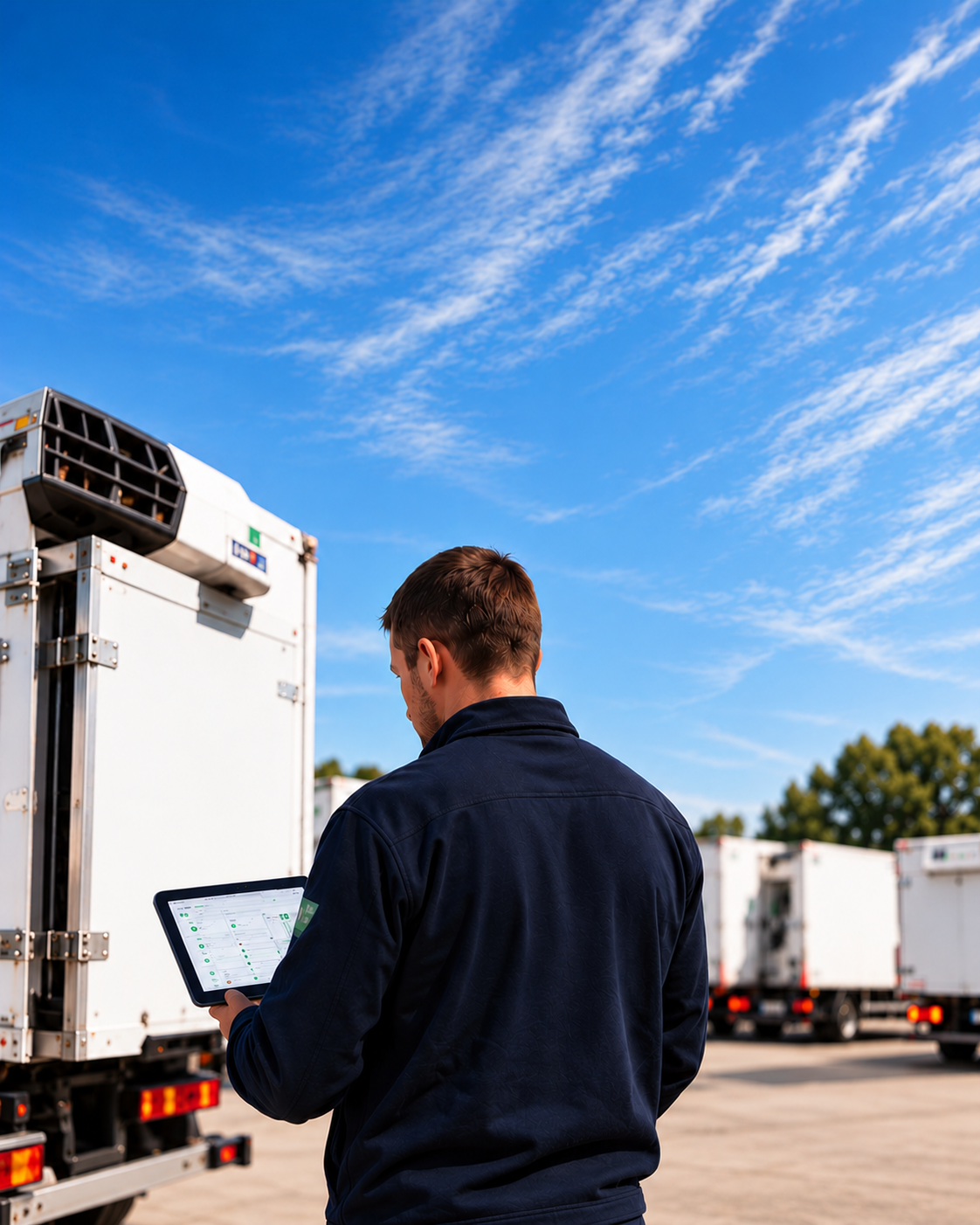
Beyond maintenance and vehicle monitoring, telematics also supports efforts to reduce environmental impact.
For example, actual fuel consumption data helps improve the accuracy of the fleet's carbon footprint calculations. Analysing vehicle usage and distances travelled also helps identify which vehicles could be suitable for alternative powertrains, particularly electric ones.
This deeper understanding of vehicles and how they are used is fully aligned with Petit Forestier Group's ambition to become the global leader in sustainable refrigerated rental solutions. By combining operational performance with better management of environmental impact, connectivity provides another way to advance the Group's core business: refrigerated vehicle rental.
Why accelerate connectivity now?
Vehicle connectivity is not new to Petit Forestier Group. However, several developments are now making it possible to accelerate its deployment.
Until recently, connecting a vehicle mainly involved installing an additional telematics device.
Today, more and more manufacturers are producing vehicles with built-in equipment capable of transmitting data. This means that certain information can now be accessed with a single click, without systematically having to install additional hardware.
At the same time, the European regulatory framework is evolving, particularly with the Data Act, which facilitates access to data generated by connected products.
Over recent years, Petit Forestier Group has also developed the expertise and tools needed to collect and use data from a variety of sources, including vehicle manufacturers, refrigeration unit manufacturers and other equipment suppliers.
The Group now has the technological maturity and expertise required to accelerate the large-scale deployment of connectivity.
This marks another step in a long-term strategy to progressively extend connectivity across the entire fleet.
From understanding vehicles to anticipating needs
Increasing the number of connected vehicles is not simply about scaling up. It also creates new opportunities to analyse data and improve services.
The more data becomes available, the greater the potential to identify trends, better understand vehicle performance and develop new services.
One of the most promising opportunities is predictive maintenance.
By combining data analysis with the capabilities of artificial intelligence, the ambition is to identify early warning signs of a potential breakdown before it occurs.
In the longer term, this information could be cross-referenced with branch availability and spare parts inventories to help plan maintenance interventions more effectively.
Artificial intelligence could also help automate certain stages of alert processing, while ensuring that teams remain in control of decisions and interventions.
The challenge is therefore no longer just to understand what is happening with vehicles, but also to better anticipate what might happen next.
Beyond the announced doubling of its connected fleet, the Group's ambition remains the same: to make data a tool for improving service quality and supporting customers.
Petit Forestier Group selects Hiboo to manage data across its entire fleet
Petit Forestier Group and Hiboo, a specialist in data and the decarbonisation of industrial fleets, are joining forces to optimise the collection and management of data generated by the Group's connected fleet.
European leader in temperature-controlled refrigeration solutions
For over 115 years, Petit Forestier Group has been shaping the future of refrigeration to provide its customers with the best refrigerated solutions.
Climate and Environment
We are committed to reducing our carbon footprint. We take concrete action within the Group by adopting more sustainable practices and support our customers in their energy transition.